
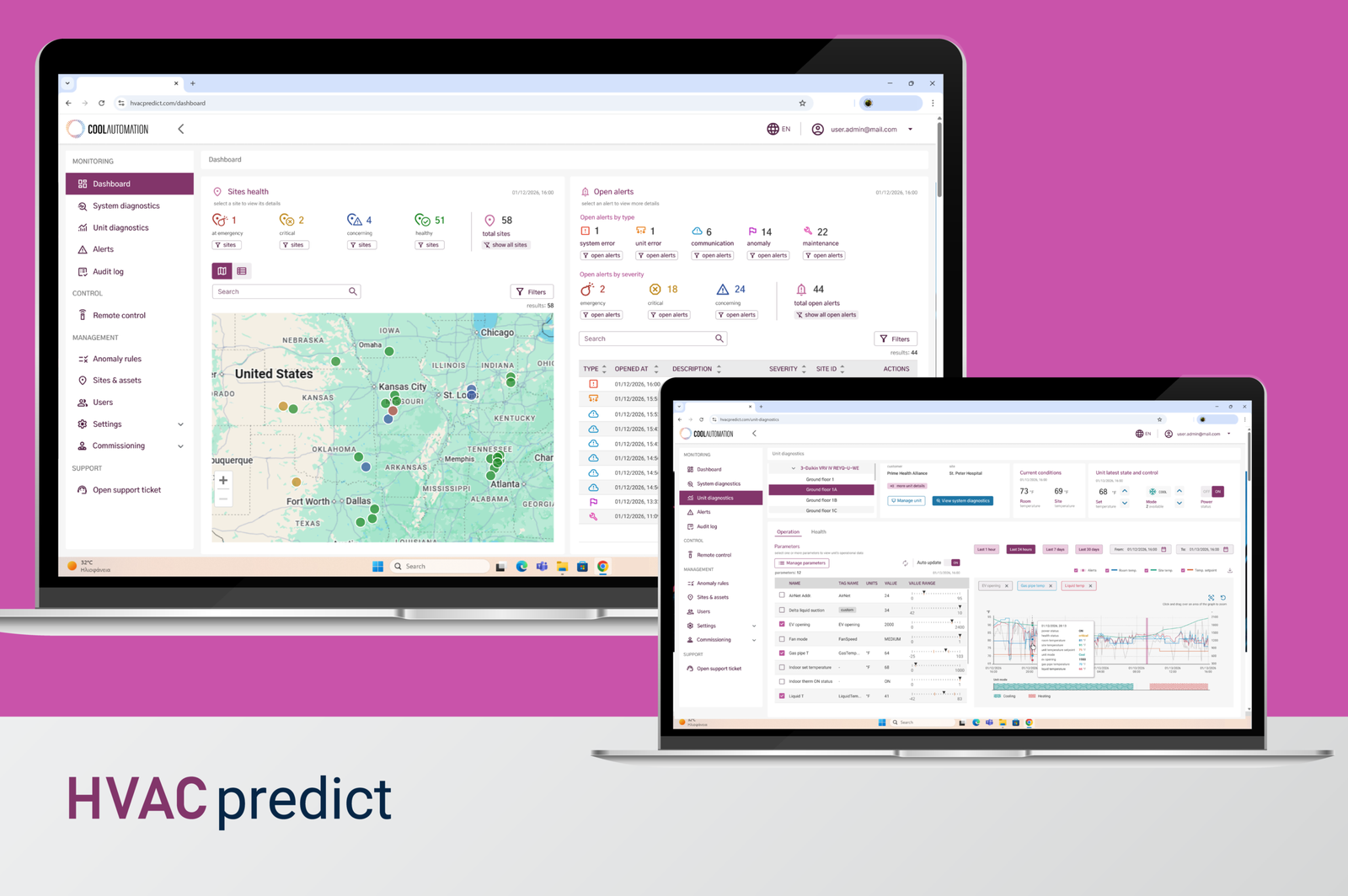
Predictive maintenance of HVAC systems across multiple sites
Redesigning a predictive maintenance platform to help HVAC service teams prioritize alerts, investigate issues, and manage multi-site portfolios more efficiently.
HVACpredict is a predictive maintenance platform for HVAC systems across multiple sites. I redesigned the CoolAutomation PdM platform to help service providers and portfolio managers, move faster from portfolio-level monitoring to alert investigation and diagnostics. The redesign focused on reducing cognitive overload, improving alert prioritization, clarifying asset hierarchy, and creating a more scalable interface that could support different user roles and future HVAC system types without fragmenting the product experience.
My role: UX/UI Designer
Timeline: Jan. – Mar. 2026 (3 months)
Main tools: Figma, ChatGPT, Adobe
Contribution: heuristic UX audit, desk research, stakeholder and user insight synthesis, design brief, information architecture, interaction design, UI redesign, prototyping
The goal is to support HVAC service providers, facility managers and technical engineers, through a predictive maintenance and diagnostics web interface, to identify and prioritize issues at their clients HVAC systems, before they strategically decide to intervene as needed.
The users can monitor the health status of their clients’ sites, systems and units, based on incoming alerts. Alerts derived from system errors, maintenance, and communication are based on diagnostics, while alerts derived from flagged incidents, anomalies, are about the system’s behavior and the result of a rule-based mechanism for predictive maintenance. The users can also monitor operational data and remotely control the HVAC units.
The redesigned core monitoring experience evolved around three main screens:
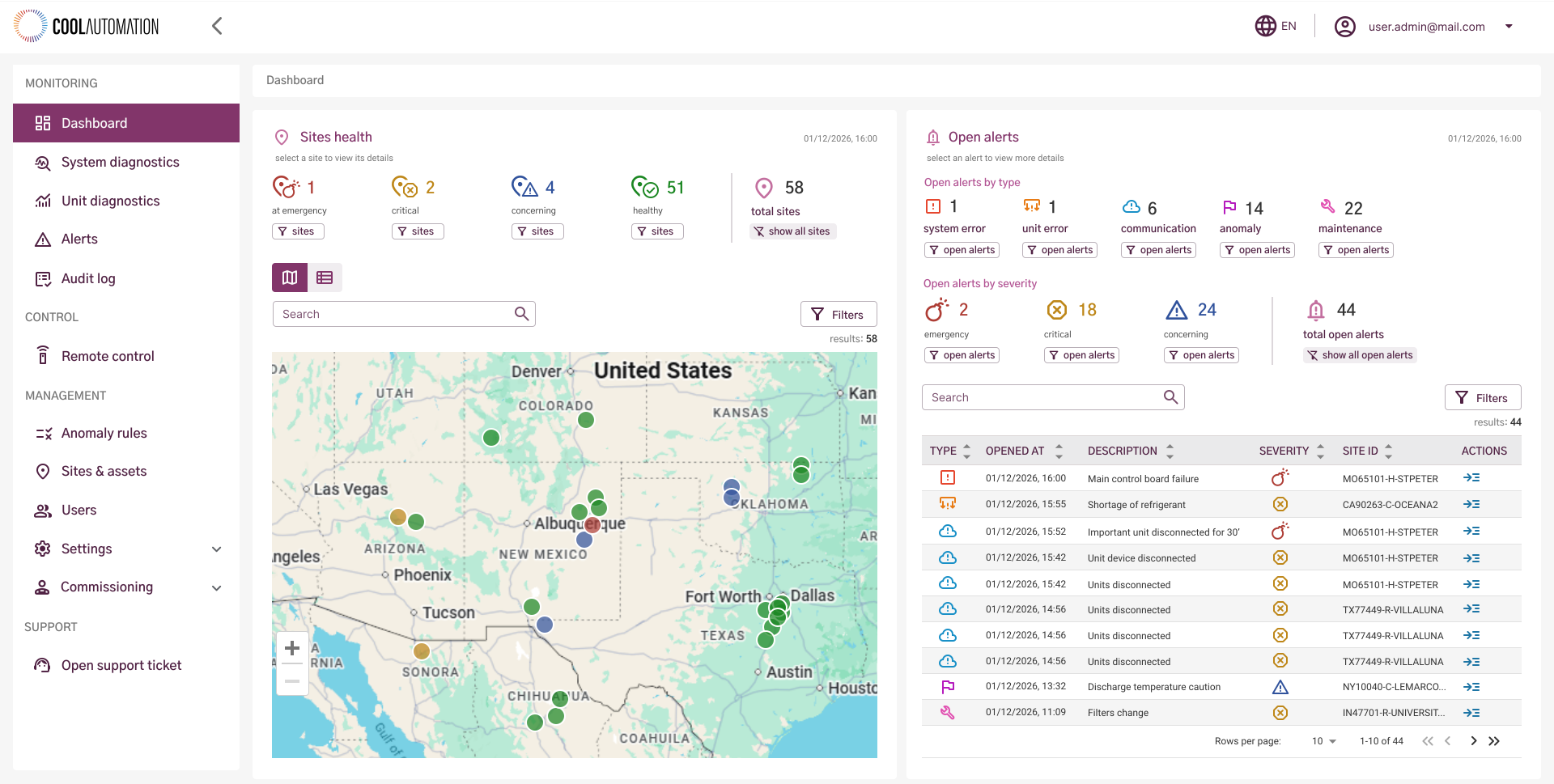
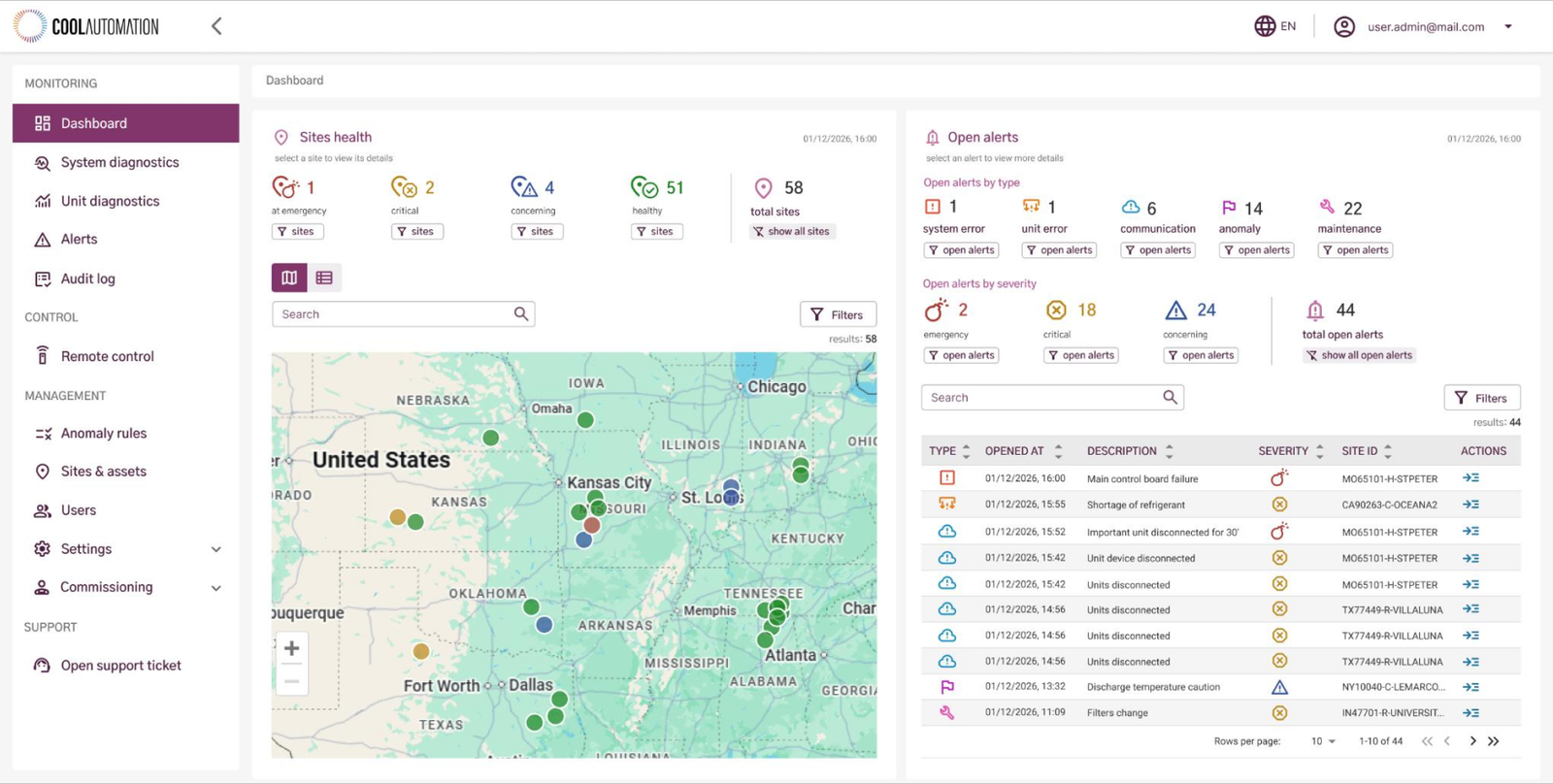
- Main dashboard / Home
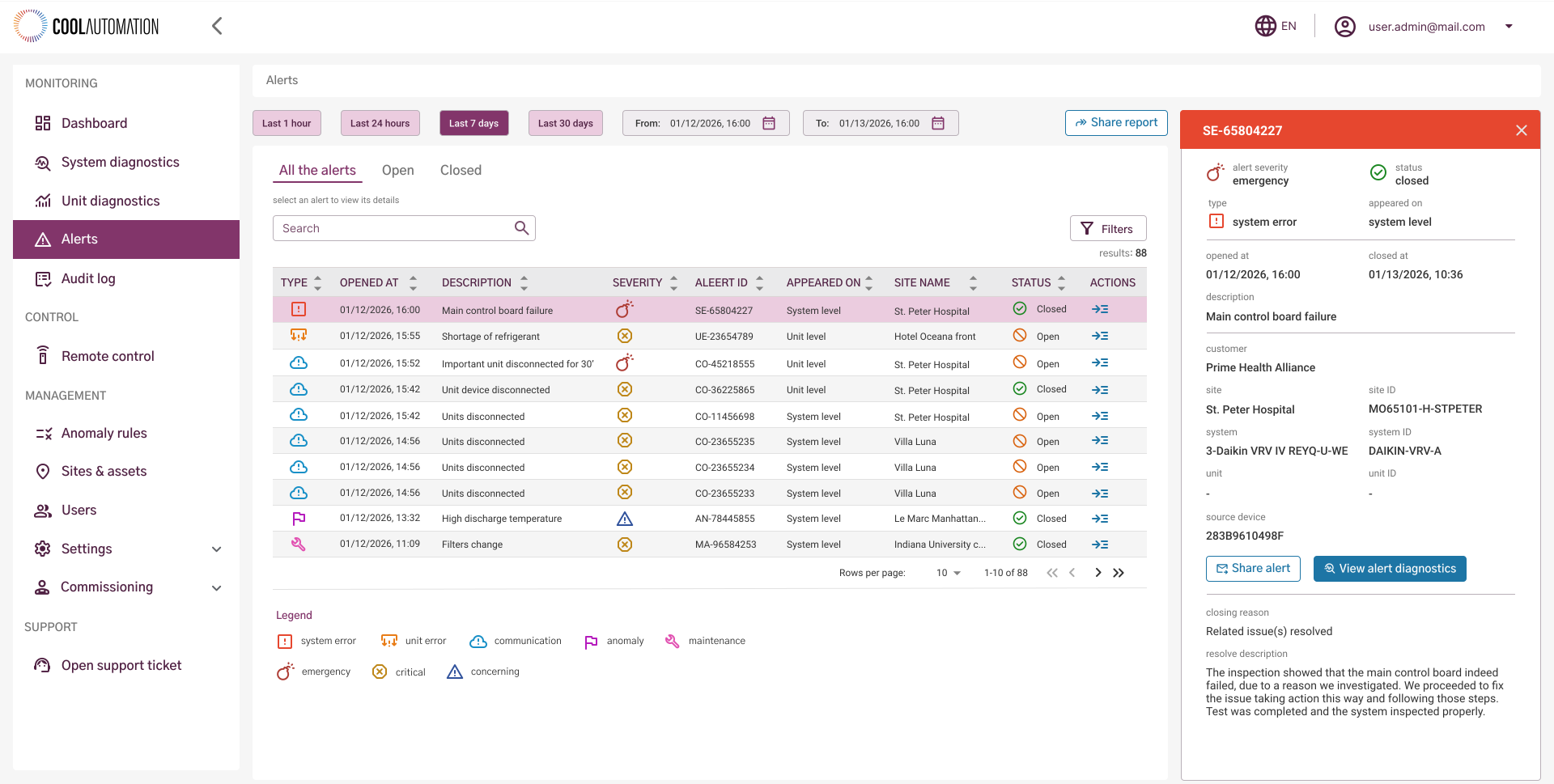
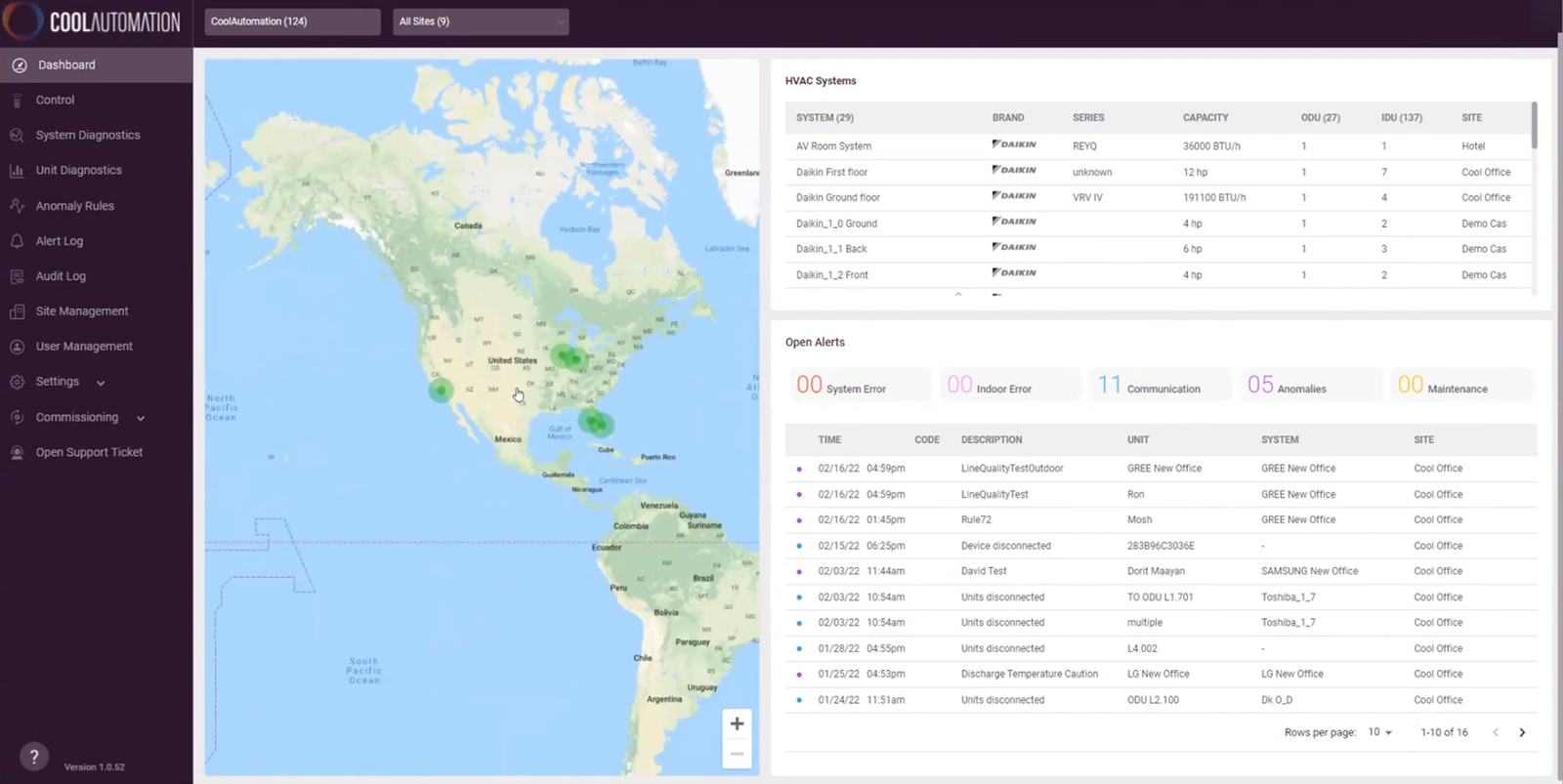
An at-a-glance overview of all sites, with site health, severity signals, map/list views, and entry points for deeper investigation. - Alerts
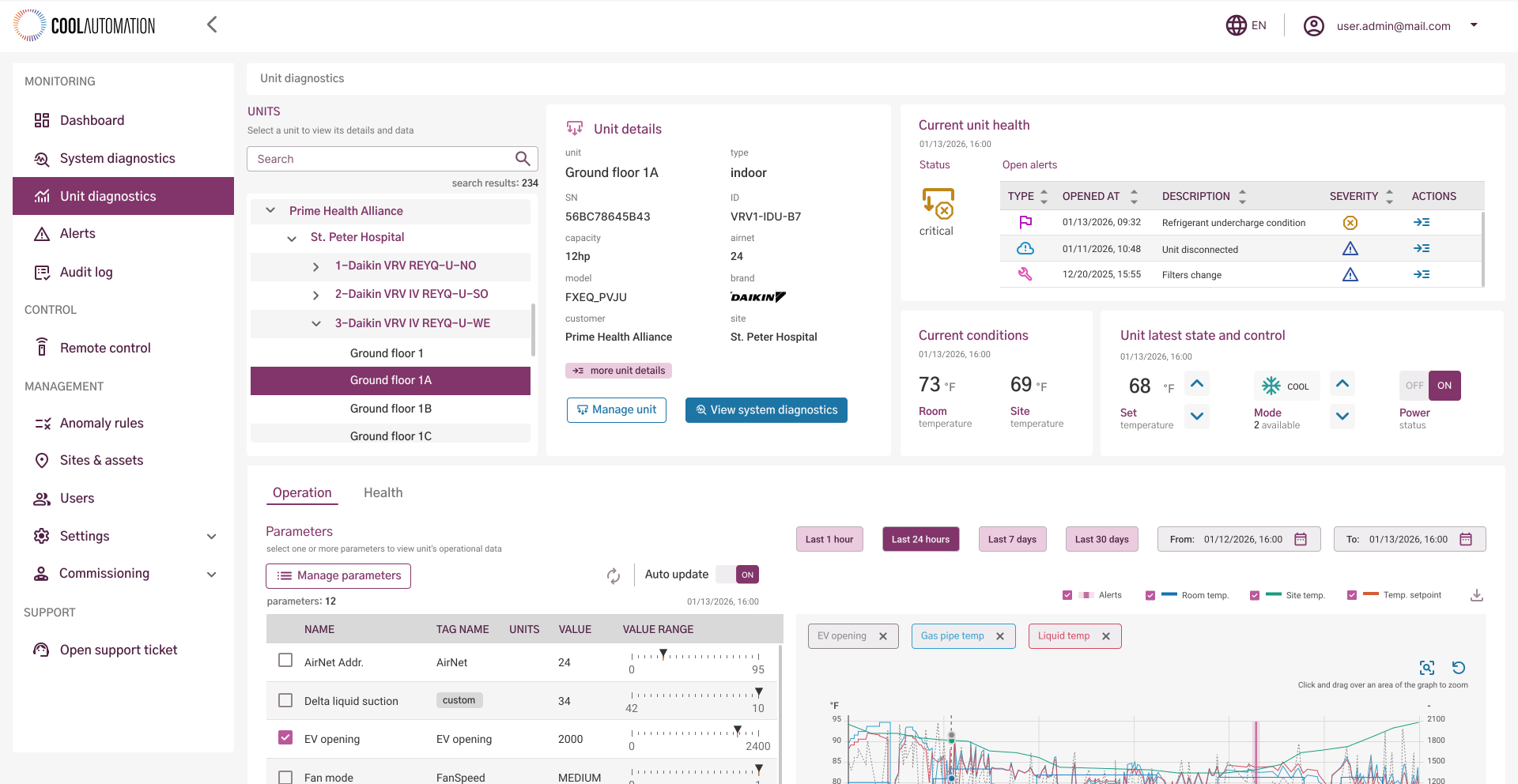
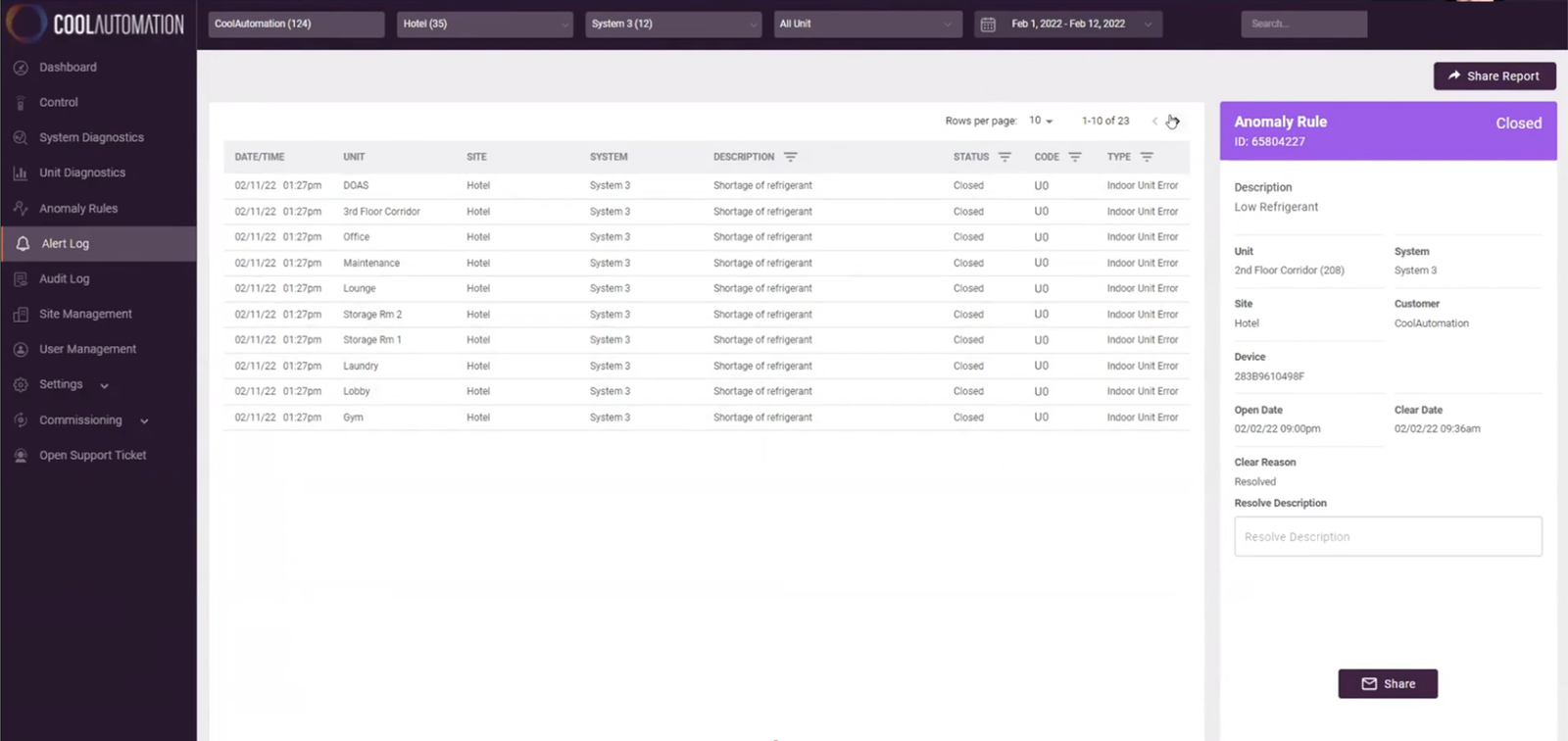
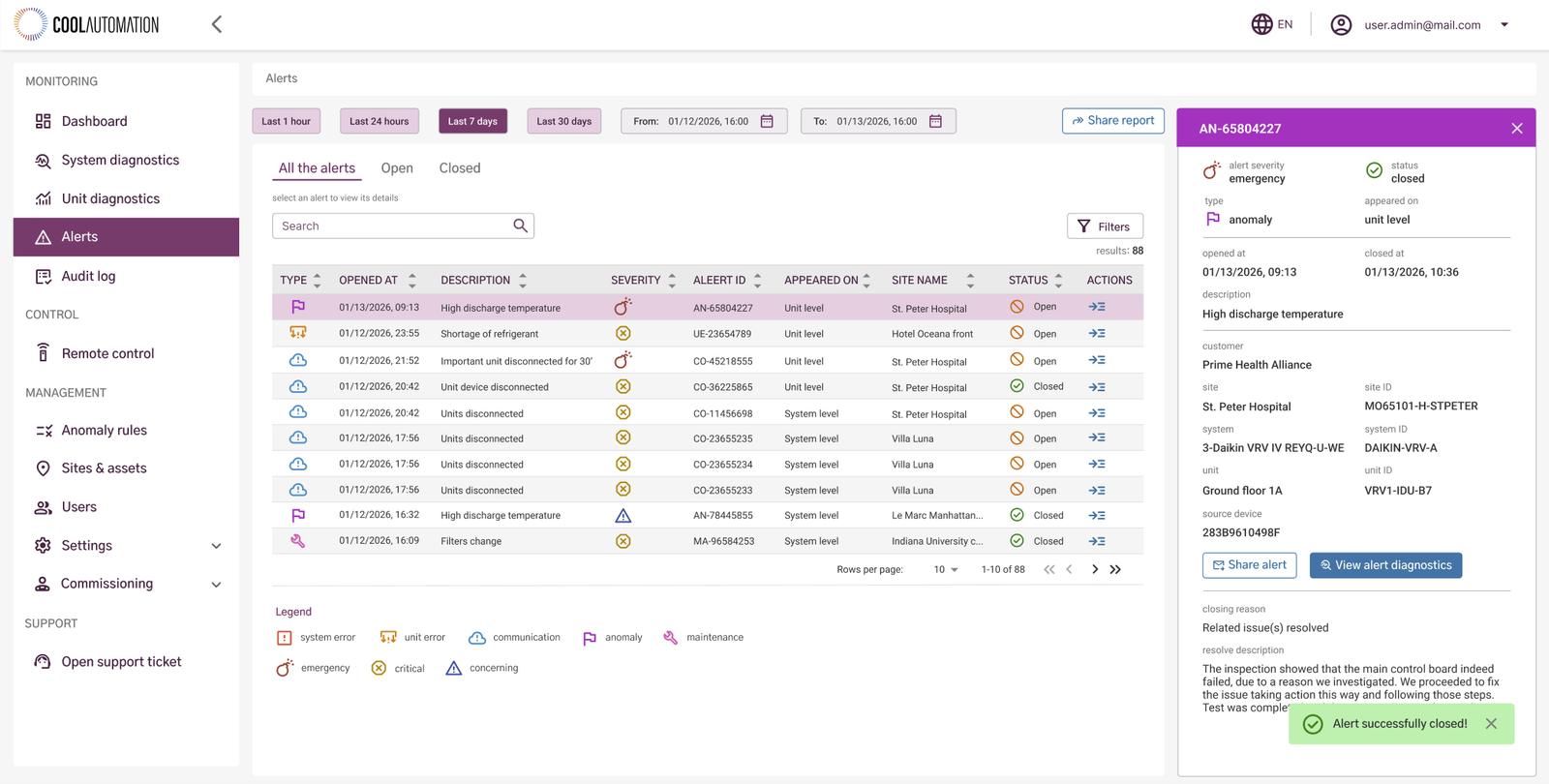
A searchable, grouped, filtered, and sortable alert experience that helps users prioritize by severity, customer, site, location, equipment, or operational need. - Unit diagnostics
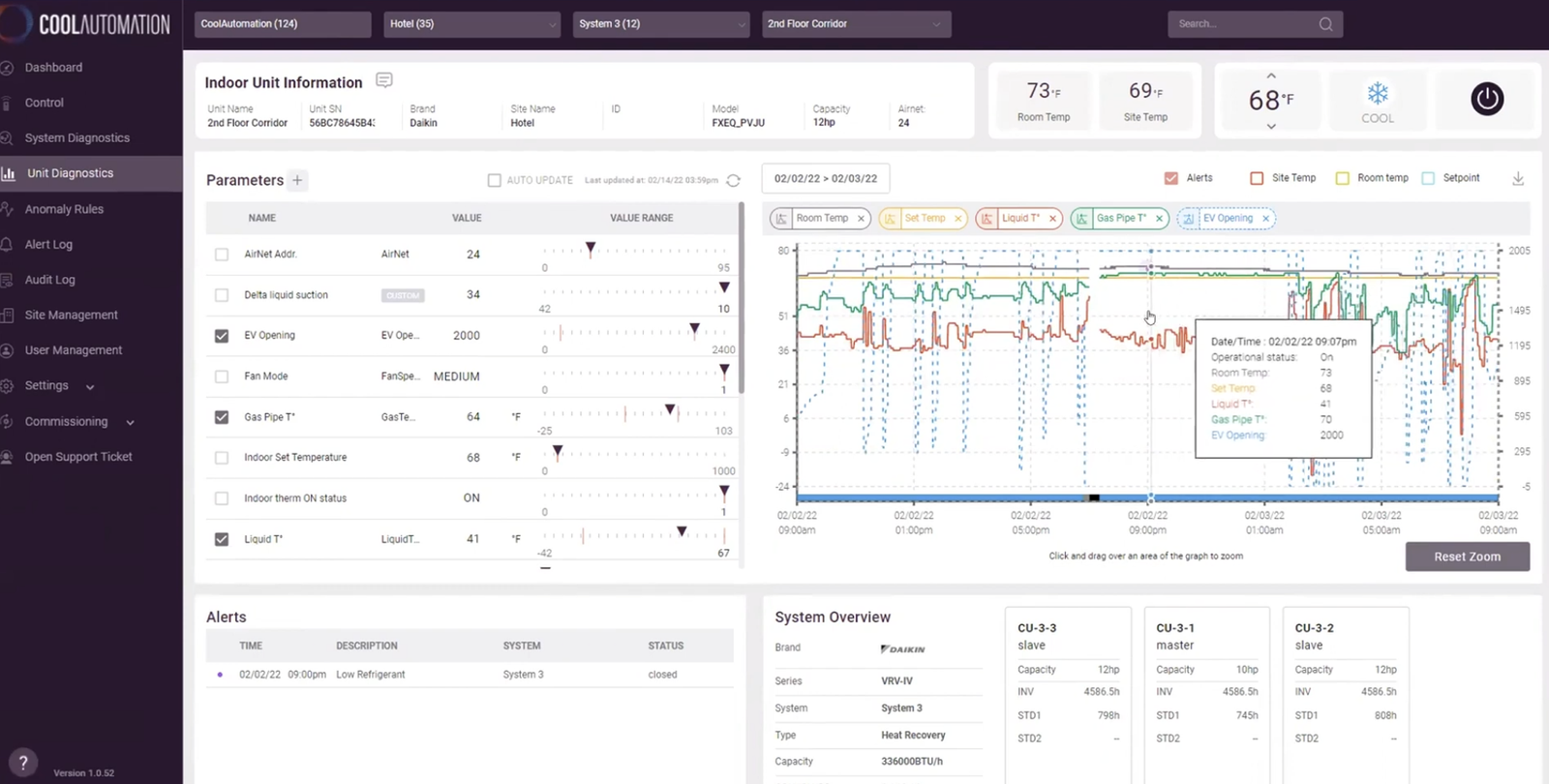
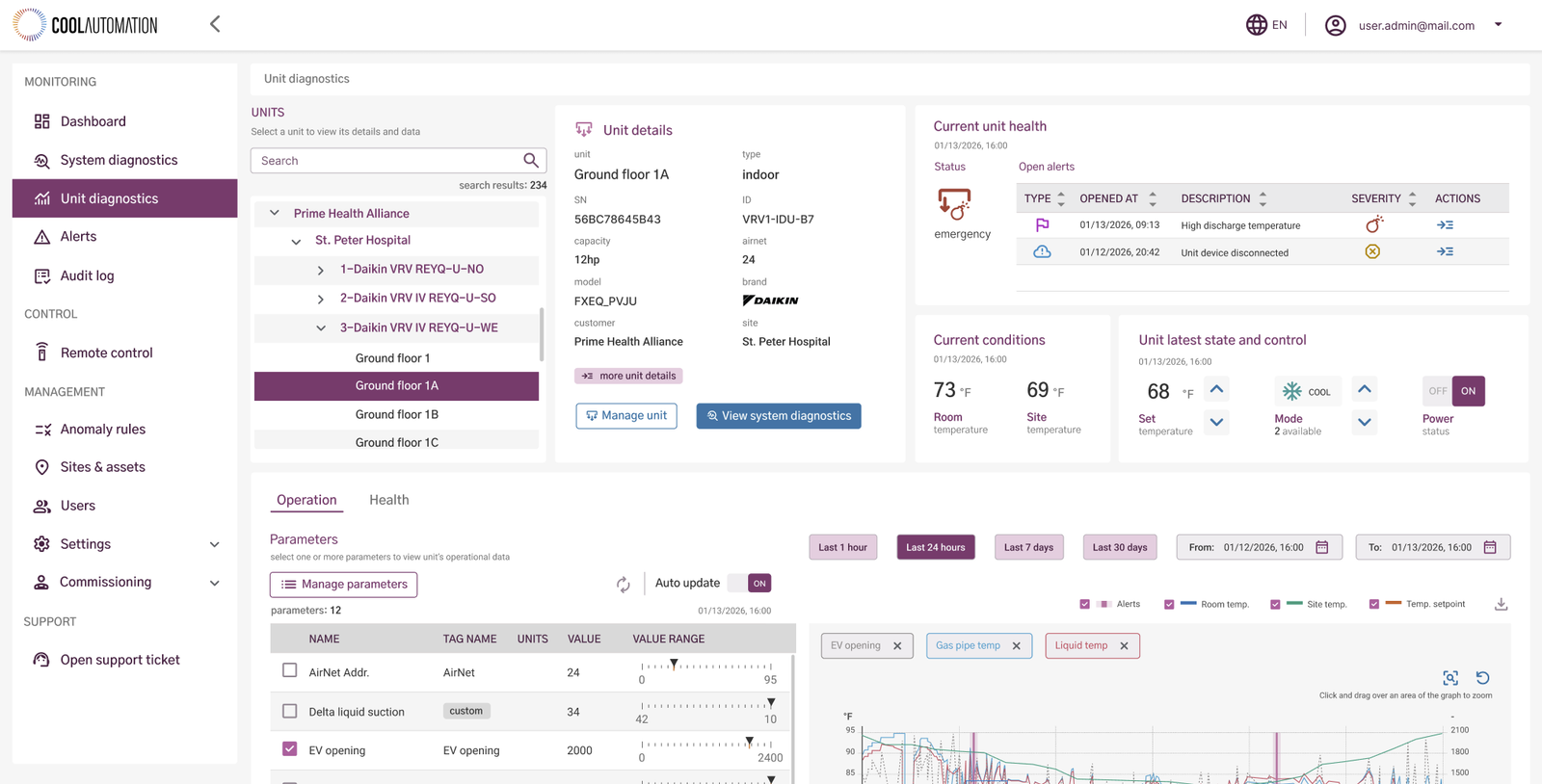
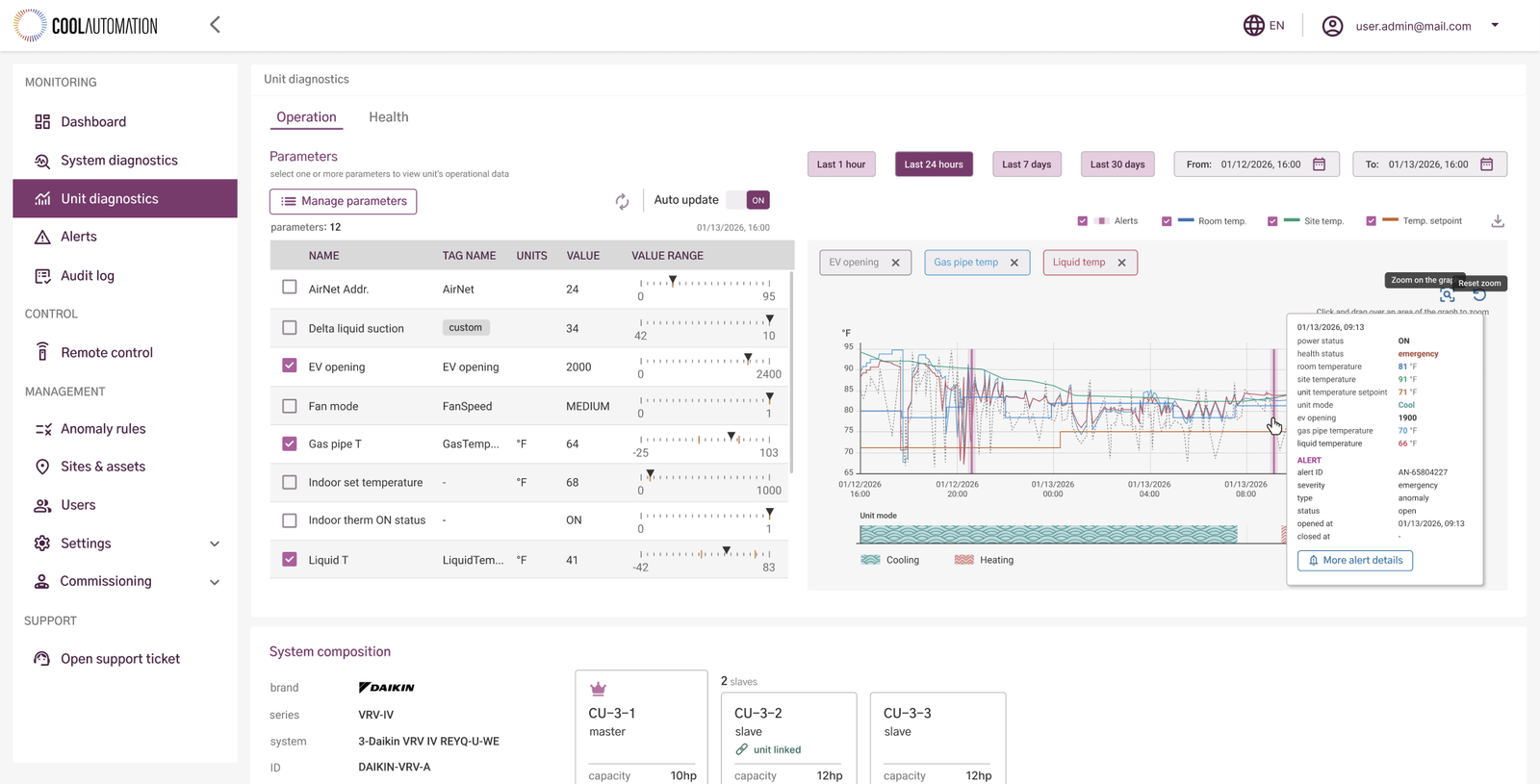
A clearer diagnostics view that supports investigation at unit level, with improved hierarchy, relationships, and navigation from high-level alerts into detailed data.
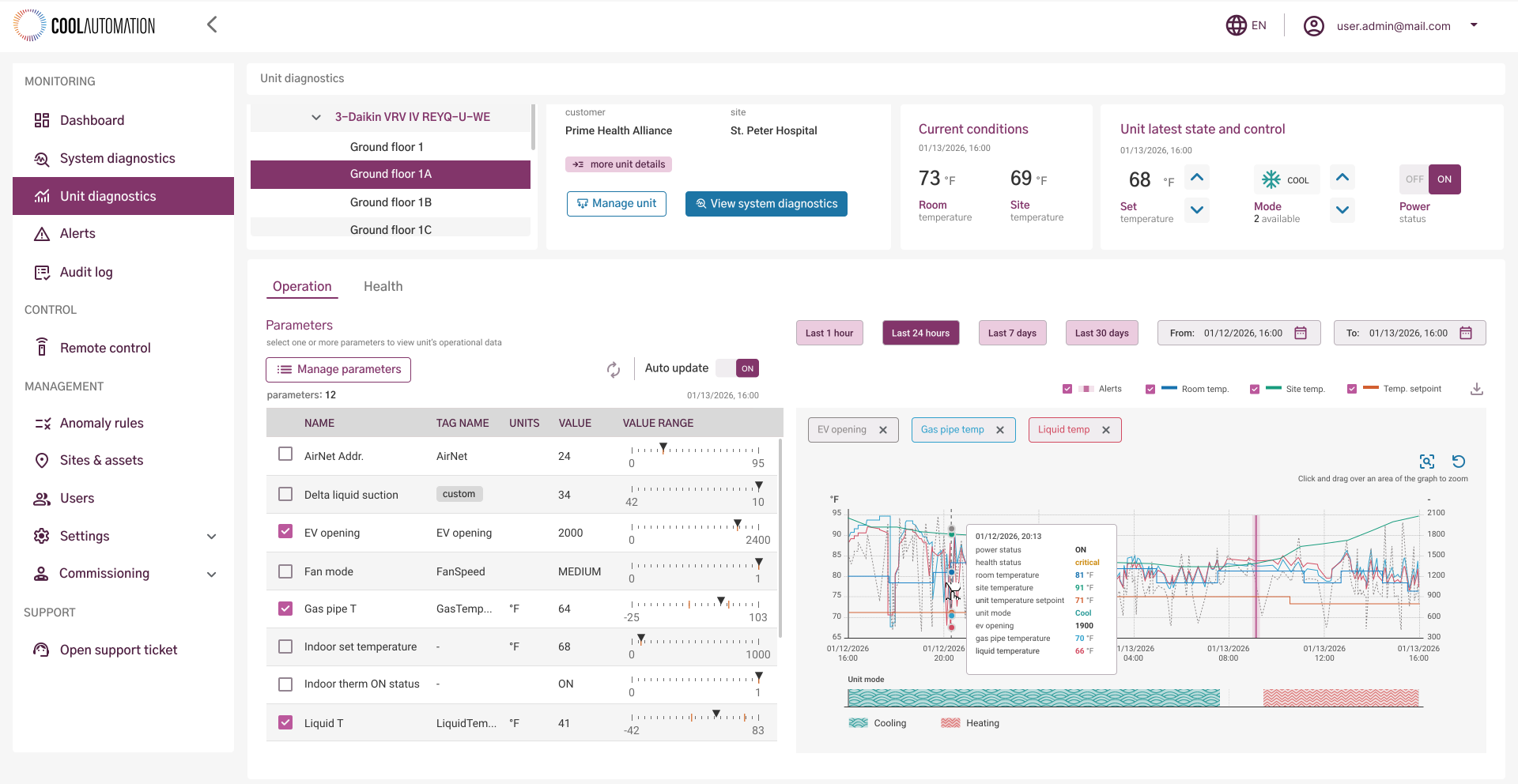
The platform needed to scale without becoming more complex. Service providers and portfolio managers had to monitor many sites, understand alert severity, and investigate issues quickly, but the existing system made prioritization, navigation, and diagnostics heavy.
The existing platform showed the same depth of technical data in the same way to different user groups, including service providers, site/portfolio managers, and technical engineers. This created cognitive overload, inconsistent workflows, and a stronger reliance on support intervention. The redesign needed to deliver role-appropriate insights while keeping a unified, scalable product structure that could support larger portfolios, different permission levels, and future HVAC system types.
The challenge was to redesign the experience so users could move from overview to action with more confidence, while keeping the interface reusable and maintainable across roles.
- Audited the existing experience
Started with a heuristic UX/UI audit to document usability issues around structure, navigation, hierarchy, visual design, and interactions before being influenced by stakeholder opinions. - Built product and market understanding
Studied existing product materials, demo content, market context, and competitor direction to understand how the solution positioned itself within HVAC predictive maintenance. - Synthesized stakeholder and user needs
Mapped needs from product, support, technical, sales, and user perspectives. Key themes included alert overwhelm, unclear data interpretation, difficulty planning resources, need for better filtering, and clearer business value. - Defined the redesign brief and scope
Framed the core problem around role-appropriate insights, unified structure, and scalable technical foundations. The first redesign phase focused on monitoring HVAC systems and incoming alerts, while rule creation, setpoint settings, and performance reporting were left for later phases. - Identified core UX opportunities
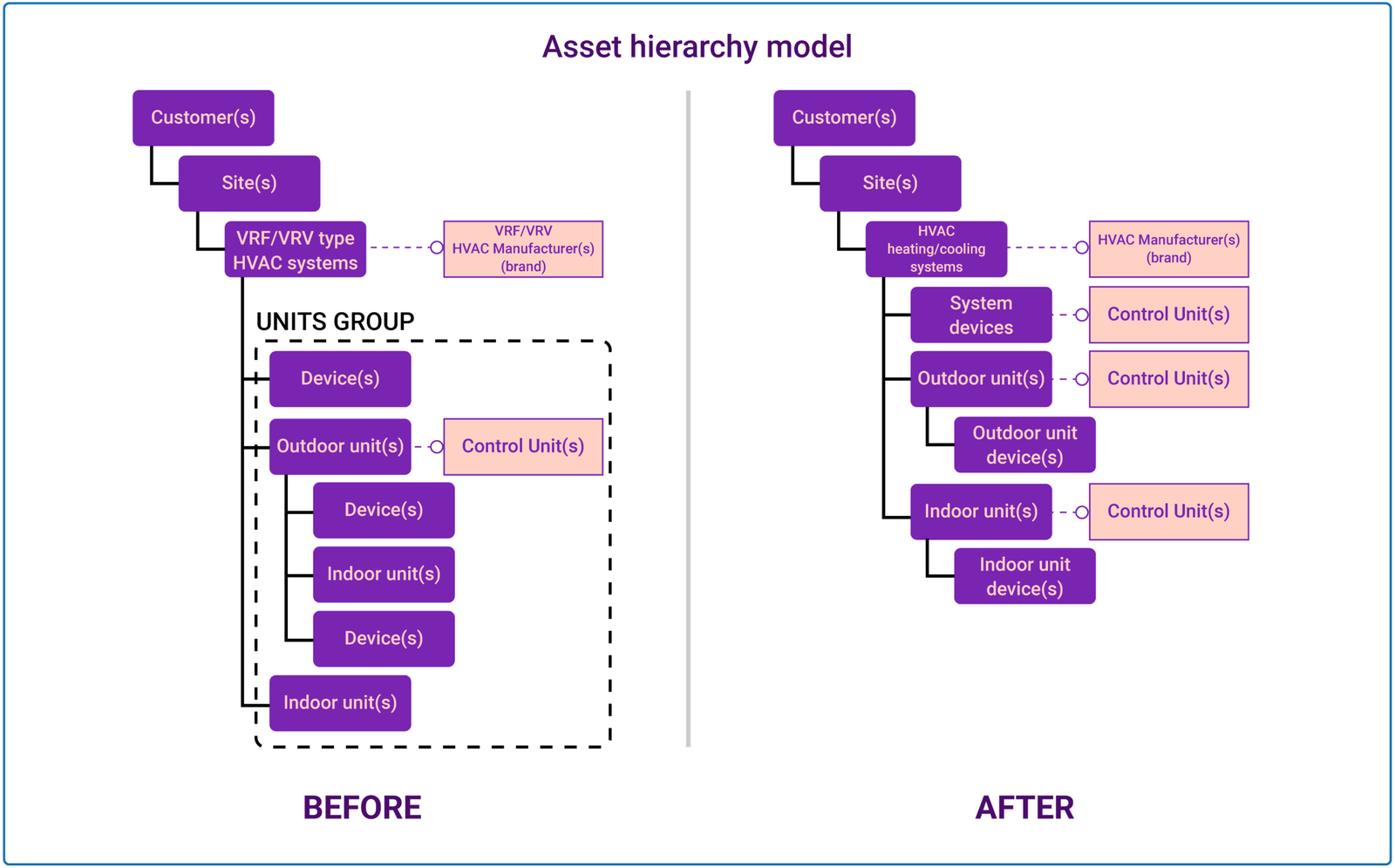
The analysis surfaced issues around lack of alert severity, weak prioritization by location/customer, difficult navigation between systems, units, and alerts, unclear asset hierarchy, and error-prone rule handling. - Designed around operational reality
The redesign supported both alert-triggered investigation and investigation without a clear alert, because real maintenance work often starts from partial information, vague site reports, or past incidents. - Prototyped the main navigation paths
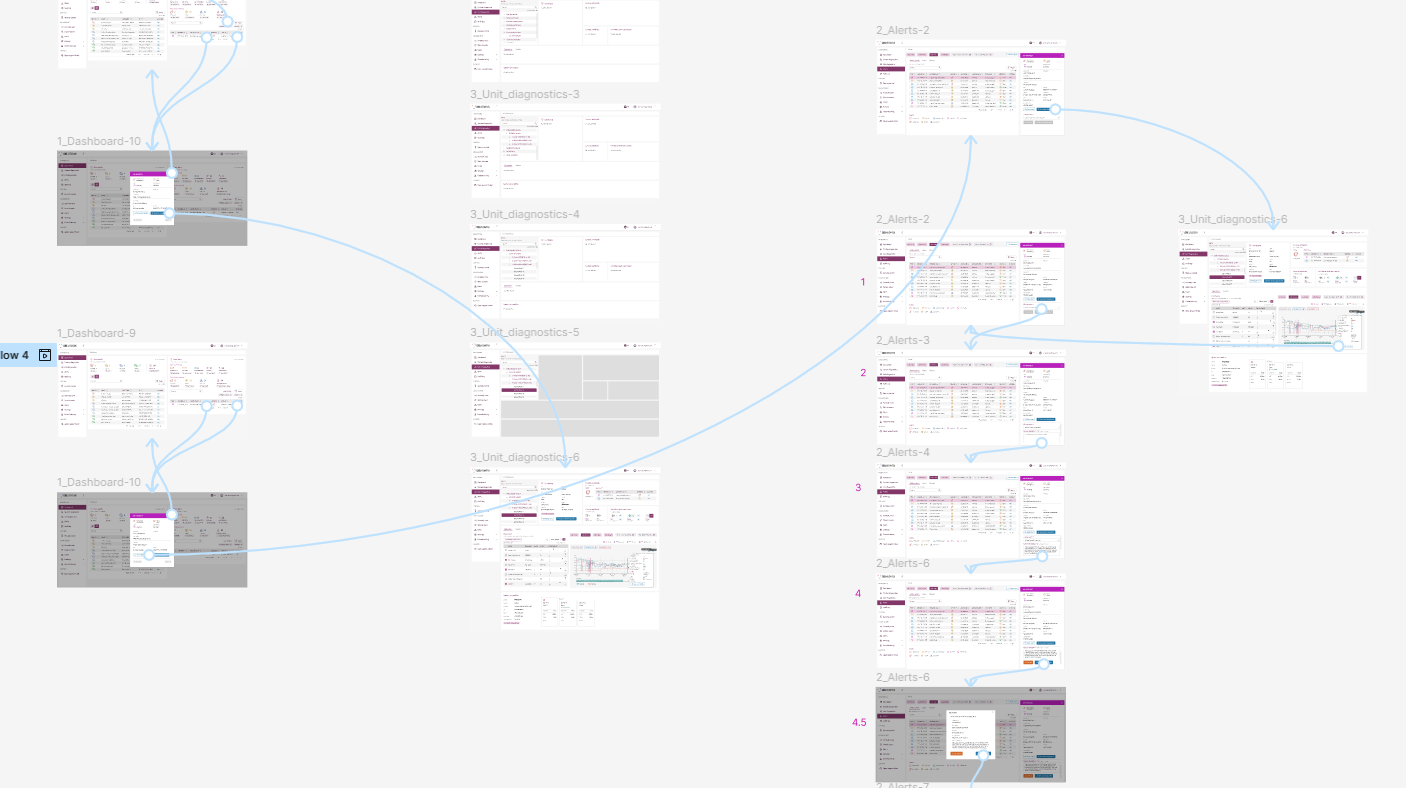
Core flows covered emergency-alert prioritization from map and list views, alert investigation through unit diagnostics, and closing an alert after checking whether the issue was resolved.
Tested the main navigation paths and flow of action in order to find mistakes or omissions, refine placements and consistency, as well as design for different states of screens.
I redesigned the core monitoring flow into a clearer dashboard, alert-management experience, and unit-diagnostics view. The new structure helps users see the most urgent site conditions first, filter and sort alerts based on real operational needs, and move gradually from portfolio overview to detailed investigation without losing context.
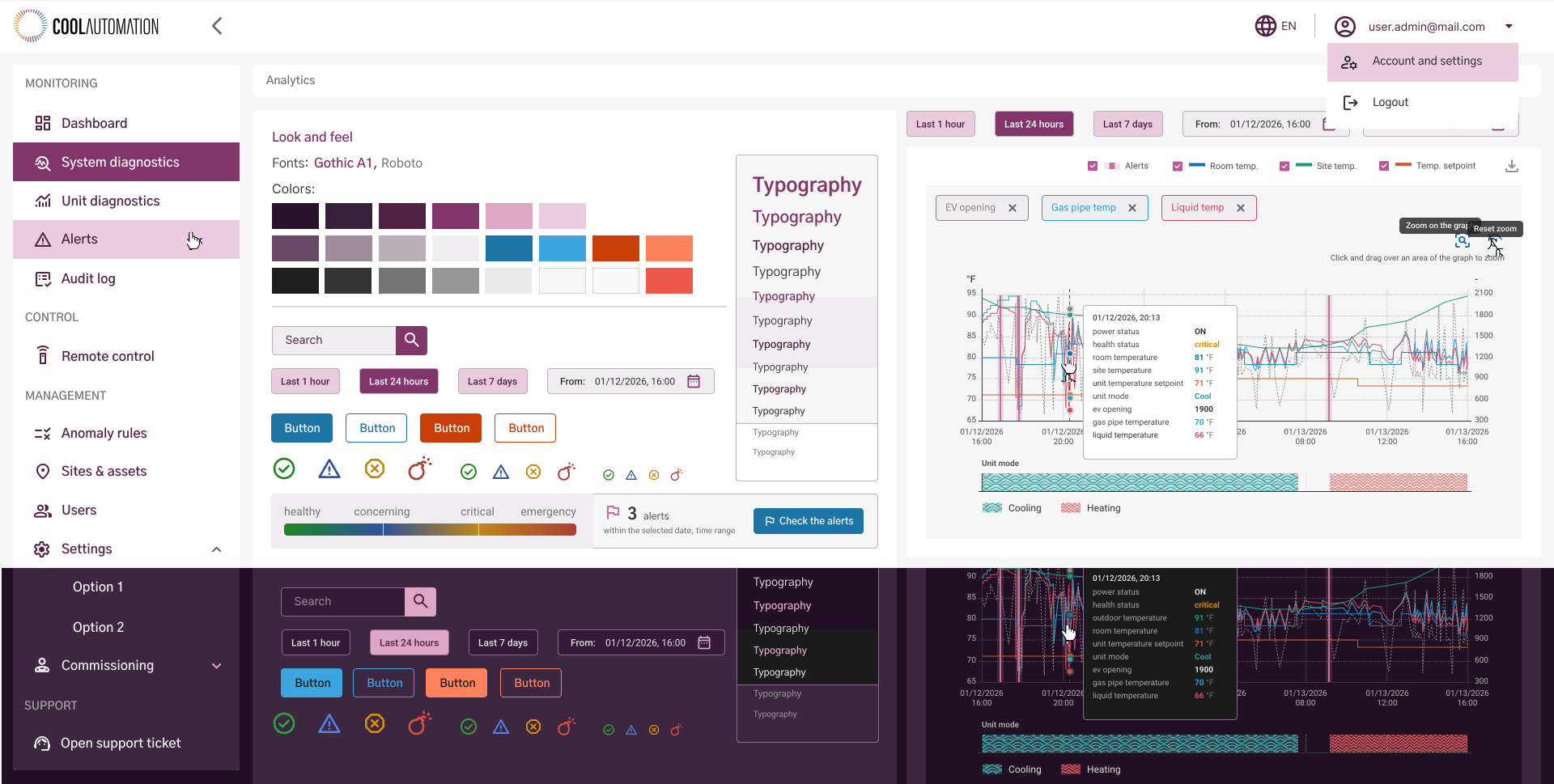
The redesign also introduced clearer visual hierarchy, improved naming, more scalable components, better light/dark theme consistency, cleaner navigation groups, and a stronger separation between global app controls and page-specific actions.
The redesign established a scalable foundation for monitoring and investigating HVAC predictive-maintenance alerts. It improved prioritization, navigation, asset hierarchy, and alert comprehension while keeping the interface reusable across user roles. The main lesson was that a complex technical product does not always need less information. It needs better structure, clearer relationships, and stronger guidance from overview to action.
Disclaimer and design limitations:
This is not a project I completed for CoolAutomation. It is a speculative “what-if” case study created to demonstrate my design thinking and problem-solving approach. Some ideas are inspired by solutions I have previously implemented for other clients with similar challenges.
I did not conduct user research for this case, nor did I collaborate with or receive any information from CoolAutomation. I have never worked with the company, nor do I have access to any internal resources or proprietary data.
Where user research insights would normally be gathered, I fabricated product, stakeholder and user perspectives based on publicly available industry sources and my prior experience in similar project contexts (outside the HVAC industry).
This means the work shown here may not fully reflect real-world constraints. It simply illustrates how I would probably approach redesigning a predictive-maintenance platform if this were a real project.
Sources:
- Company YouTube demo videos, incl. HVAC Predictive Maintenance: Turbocharge Your Technical Service Provision, Feb. 2022
- Company website
- Competitor research, online and AI supported
- Industry pain-point research, online and AI supported
Find me
Drop me an email
anastasia.tsita@gmail.com
© 2026 Anastasia Tsita / Cookie policy / Privacy policy
